Product Category
Contact Us
Phone:
86-577-86569666/85986466
Fax: 86-577-85888877
Email: zhu.yuqing@zgkkv.com
Agent Hotline: 86-18523831111
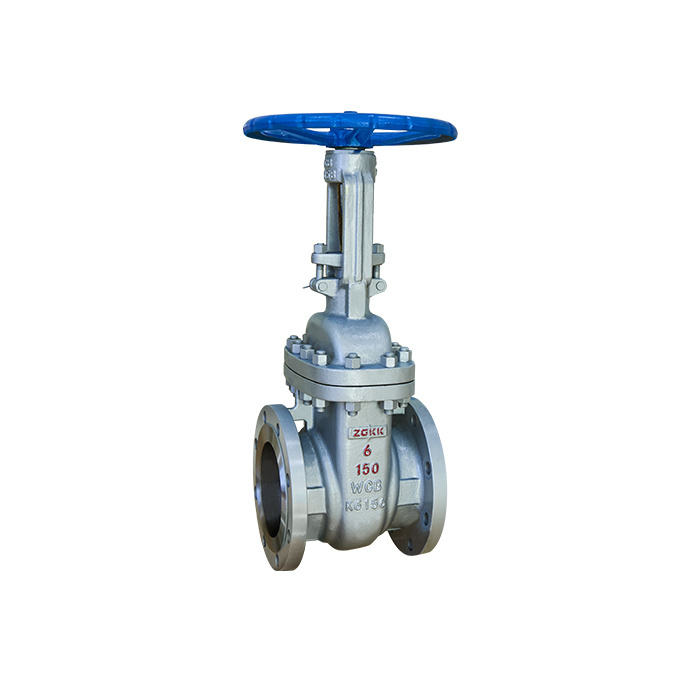
Keyword: ANSI Gate Valve
Key words:
E-mail:
Details
Our products now cover a wide range of standardized fluid control products that can be adapted to a variety of drive modes, comprising ball valves, butterfly valves, gate valves, globe valves, check valves, safety valves, rotary ball valves, plunger valves etc. Our products are widely used in water conservancy, municipal, electric power, gas, petrochemical, coal chemical, energy, environmental protection, medicine, real estate, metallurgy, mining and many other fields.
ANSI Gate Valve is widely used in industrial piping systems where reliable shut-off and stable flow isolation are essential. Designed according to ANSI standards, this type of valve offers consistent dimensions, pressure performance, and connection compatibility. It is commonly selected for oil and gas, chemical processing, power generation, water treatment, and general industrial applications. With a simple operating principle and strong sealing capability, ANSI gate valves provide a practical solution for controlling large-volume pipelines.
How an ANSI Gate Valve Works
An ANSI gate valve controls fluid flow by moving a gate vertically inside the valve body. When the gate rises completely, the pipeline opens and fluid can pass through with relatively low resistance. When the gate moves downward, it closes the passage and isolates the downstream section. This full-open or full-closed design makes the valve more suitable for isolation than for continuous throttling.
The valve normally includes a body, bonnet, gate, stem, seat, packing, and operating mechanism. Depending on the application, manufacturers can provide different gate and seat configurations. The stem transfers movement from the handwheel or actuator to the gate, allowing operators to open or close the valve with controlled force.
Why Industrial Buyers Choose ANSI Gate Valves
One important advantage is their ability to provide dependable pipeline isolation. When fully open, the gate moves away from the main flow path, which helps reduce pressure loss compared with many throttling valve designs. This characteristic makes gate valves useful in pipelines that require efficient fluid transportation over long operating periods.
ANSI gate valves also offer flexible installation options. Flanged connections are common in industrial systems because they allow secure assembly and easier maintenance. The valve can be matched with compatible piping components according to pressure class, nominal size, and project requirements. This helps engineers select a valve that fits the overall pipeline design without unnecessary modification.
Durability is another major consideration. Industrial pipelines may handle water, steam, oil, gas, chemicals, or other demanding media. Material selection therefore plays an important role in valve performance. Carbon steel, stainless steel, alloy steel, and other materials can be selected according to temperature, pressure, corrosion resistance, and media characteristics.
ANSI Standards and Pressure Class Selection
ANSI gate valves are often specified by pressure class rather than by pressure alone. Common industrial classes include Class 150, Class 300, Class 600, and higher-pressure ratings. The correct class depends on the pipeline's operating pressure, temperature, fluid characteristics, and applicable design standards.
Buyers should also check the required nominal pipe size and flange dimensions before placing an order. Valve dimensions need to match the existing piping system to prevent installation problems. For international projects, engineers should confirm applicable standards for valve design, pressure testing, face-to-face dimensions, flange drilling, and material requirements.
A reliable manufacturer should provide clear technical documentation for each valve model. Product drawings, material information, pressure ratings, testing records, and inspection documents can help buyers verify whether the valve meets project specifications.
Materials for Different Industrial Conditions
Material selection should reflect the actual working environment. Carbon steel gate valves are widely used in general industrial pipelines because they provide a practical balance between strength and cost. Stainless steel versions are preferred when corrosion resistance is a major requirement, especially in chemical, food processing, water treatment, and other demanding environments.
For high-temperature or high-pressure services, alloy materials may provide better mechanical performance. Seat and sealing materials also require careful consideration because they directly affect shut-off reliability. The selection should account for temperature, pressure, media composition, and expected service life.
Manufacturers can also offer different stem configurations and operating methods. Manual handwheel operation works well for smaller valves or systems with infrequent operation. Larger valves may require gear operators, electric actuators, pneumatic actuators, or other automated systems to improve operating efficiency.
Where ANSI Gate Valves Are Used
Oil and gas facilities use gate valves for pipeline isolation, processing equipment, storage systems, and transmission lines. Their robust construction makes them suitable for demanding industrial environments where reliable shut-off is important.
Power plants also use gate valves in water, steam, cooling, and auxiliary systems. In these applications, the valve must withstand operating temperatures and pressures while maintaining dependable sealing performance.
Water treatment facilities, chemical plants, refineries, and manufacturing facilities use gate valves across many types of piping systems. The final valve configuration depends on the medium, pipeline size, pressure, temperature, and installation environment.
What Buyers Should Check Before Ordering
Before purchasing an ANSI gate valve, buyers should first define the medium and operating conditions. Water, oil, gas, steam, and corrosive chemicals can require very different material and sealing solutions. The required pressure class and valve size should then be confirmed based on the pipeline design.
Connection type is equally important. Flanged, threaded, and welded-end configurations may be available depending on valve size and application. Buyers should also confirm whether the valve needs manual or automated operation.
Quality control should not be overlooked. A dependable supplier should have suitable production processes and inspection procedures covering body integrity, dimensions, pressure resistance, and sealing performance. For export projects, documentation and traceability can also simplify installation, inspection, and future maintenance.
Choosing a Reliable ANSI Gate Valve Supplier
The right supplier should do more than provide a standard valve catalog. Industrial buyers often need technical support, customized materials, project-specific dimensions, and consistent quality across large orders. A capable manufacturer can review pipeline requirements and recommend an appropriate valve configuration before production.
For OEM and bulk purchasing, buyers should evaluate production capacity, quality management, machining accuracy, testing capabilities, packaging, and delivery performance. Clear communication is especially important when valves are being supplied for international engineering projects.
An ANSI gate valve remains a practical choice for industrial pipeline isolation because of its straightforward structure, low flow resistance when fully open, and broad range of material and pressure options. By matching the valve design with the operating medium, pressure, temperature, connection standard, and automation requirements, buyers can achieve reliable performance and longer service life in demanding piping systems.
Related Products


Message
*Leave your contact information to get a free product quote

Address: No. 4900 Binhai 3rd Road, Longwan District, Wenzhou City, Zhejiang Province
Production Base: No.11 Xu'an Industrial Zone, Qingtian County, Lishui City
Phone: +86-577-86569666/85986466
Fax: +86-577-85888877
Email: zhu.yuqing@zgkkv.com
WhatsApp: +86-17757741891
FOLLOW US


© 2024 KeKe Group Co., Ltd. All rights reserved. SEO